Our history
The historic evolution of an iconic quarter
Discover the events that defined 400 years of Copenhagen’s cultural and financial heart.
1630
Skipperboderne
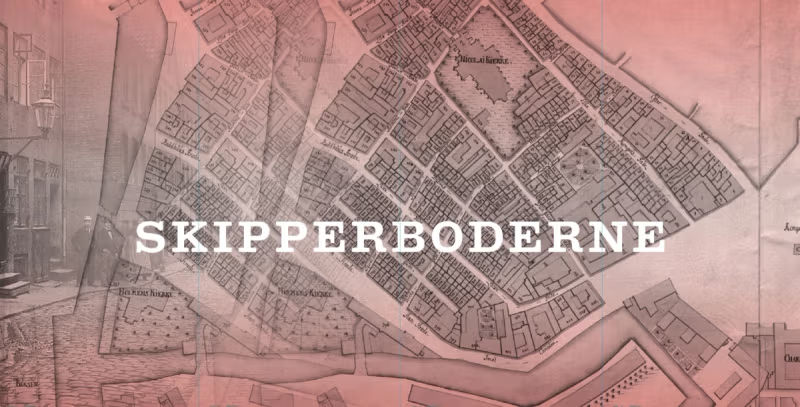
Laksegade was once Skipperboderne – a cluster of houses where the city's sailors lived when they weren't at sea. The houses were small and modest, but brimming with life and stories from distant shores. Here, captains, skippers, and crewmen swapped tall tales over the spirits, while the smell of tar, saltwater, and rather less appealing odours hung heavy in the air. When the fleet flourished under Christian IV, the need grew for proper housing for ordinary seafarers and their families, leading to the establishment of Nyboder, located near present-day Østerport. Today, it is mostly the street's maritime name that hints at how Laksegade once paved the way for a significant chapter in the maritime history of both the city and Denmark as a whole.
1795
The fire
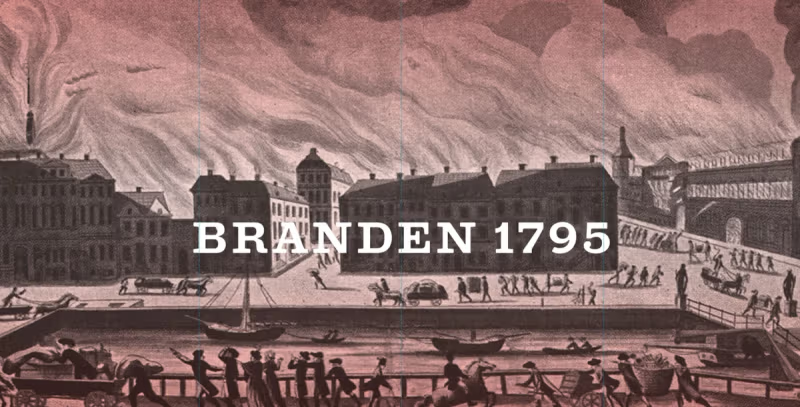
The fire on Bremerholm in 1795 was a fateful event that changed Copenhagen forever. It began as a small ember in some rigging at the Bremerholm shipyard, but in the dry summer heat the flames spread with furious speed across Holmens Kanal and raged for three days. Soon the densely packed, thatched houses of Skipperboderne stood ablaze, and a large part of the city was swallowed by the fire. More than 900 buildings were reduced to ash, including the magnificent Nikolaj Church, which left a charred tower as the only testament to its former grandeur.
1798
Peschiers Palæ
In the latter half of the 18th century, Denmark was shaped by economic prosperity, led by visionary merchants such as Pierre Peschier (1739–1812) and Erich Erichsen (1752–1837). Both stood at the forefront of a new era in which Copenhagen developed into a hub of international shipping and trade. With connections to the colonies, they imported everything from sugar, tea, and coffee to rare spices that filled the city's warehouses and markets. The grand merchant houses, which still stand in Laksegade today, overflowed with wealth, and the merchants left their mark not only on the city's economy but also on its architecture. Their fortunes paved the way for magnificent buildings, created by the leading master builders of the day. The wealth was staggering – even the king came to the great merchants to borrow money.
1819
H.C. Andersen
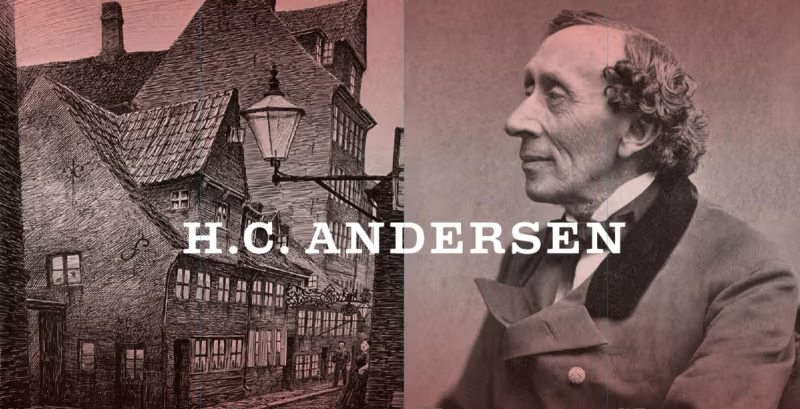
When Hans Christian Andersen moved from Odense to Copenhagen in 1819, it was in hopes of building a future as an artist. The adventure began in Laksegade, where at just 14 years old he moved into the quarter with Ulkegade, Hummergade, Laksegade, and the other streets named after creatures of the sea. The area was one of the city's most notorious neighbourhoods at the time and lay roughly where Bremerholm sits today. It was known for its brothels, its nightlife, and the merry days when sailors came ashore. Andersen made his debut in 1829 with "A Walking Tour from Holmen's Canal to the Eastern Point of Amager in the Years 1828 and 1829" – a fanciful account of a walk from the Laksegade quarter, where you stand now, out to Amager. Later, in 1836, he performed on Christmas Eve on the stage at Peschier's courtyard near Laksegade as the tragic actor in "The Prompter's Benefit".
1842
Nightclub
In 1842, the Students' Association gained a new tenant on the ground floor of Peschier's House: piano maker Conrad Christian Hornung, who set up his business there. Hornung built a side wing, where he let the first floor to Det Forenede Borgerlige Selskab, a society for Copenhagen's affluent bourgeoisie. The club concept, which originated in England, was established relatively late in Denmark, but took off once it finally arrived. Among the most popular were Dreyers Klub and Det Norske Selskab, of which Oehlenschläger was a member, among others. Legend has it that one evening, wanting to prove he was not the slightest bit drunk, he climbed a lamppost to give a speech – or "study astronomy," as he put it. Thorvaldsen himself was also welcomed into the same club when he returned from Italy in 1838.
1875
Bankholmen
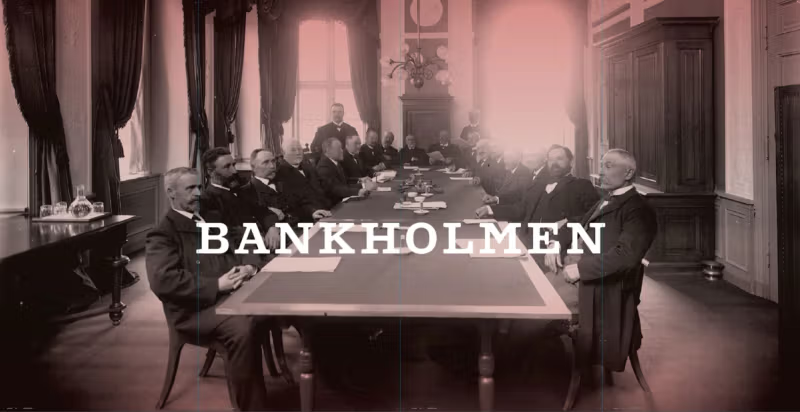
Throughout the 1800s, the great shipowners and merchants had to give way to a new economic power: the banks. The area around Nikolaj Plads and Holmens Kanal was transformed into the city's financial centre, where institutions such as Nationalbanken and Landmandsbanken established themselves in the grand buildings that still define the quarter today. Here, capital flowed through halls with high ceilings and marble floors, while the city's economic elite gathered. The banks' arrival in the area signalled a new era, where shipping and trade were replaced by lending and borrowing, and the country's high finance.
1890
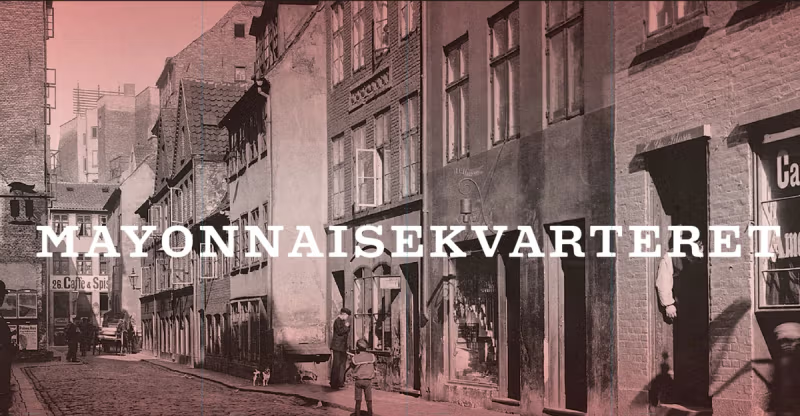
The Mayonnaise Quarter
The author Gustav Esmann (1860–1904) gave the quarter the nickname the Mayonnaise Quarter in the late 1800s – a humorous reference to the sea creatures in the street names, all of which go well with mayonnaise. Stretching between Nikolaj Plads and Holmens Kanal, the Mayonnaise Quarter was for centuries a lively area filled with small shops, taverns, and tradespeople. The streets were named after creatures of the sea, such as Ulkegade, Laksegade, and Hummergade.
1900
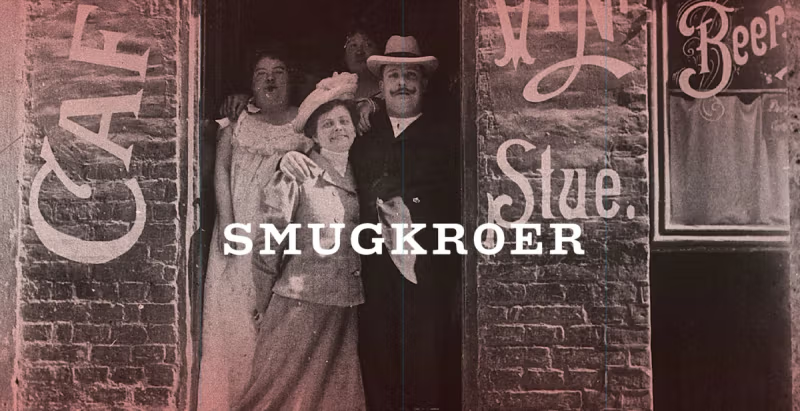
Hidden taverns
Once upon a time, the quarter around Laksegade was anything but quiet. Sailors found company with the area's hospitable ladies and quenched their thirst at the hidden taverns packed tightly along the winding streets. The streets were notorious, known as a corner of Copenhagen that never slept. The residents at the finer end of the street – closest to Østergade – eventually had enough of its dubious reputation and petitioned to have Ulkegade renamed Holmensgade instead. The street got its new name, but the taverns and brothels stayed, and so did the nightlife. In the 1930s, the old quarter was torn down, renamed Bremerholm, and today the dim alleyways are gone. The stories of the pulsing life of days past still cling to the walls – and they are not for the faint of heart.
Sign up for our newsletter