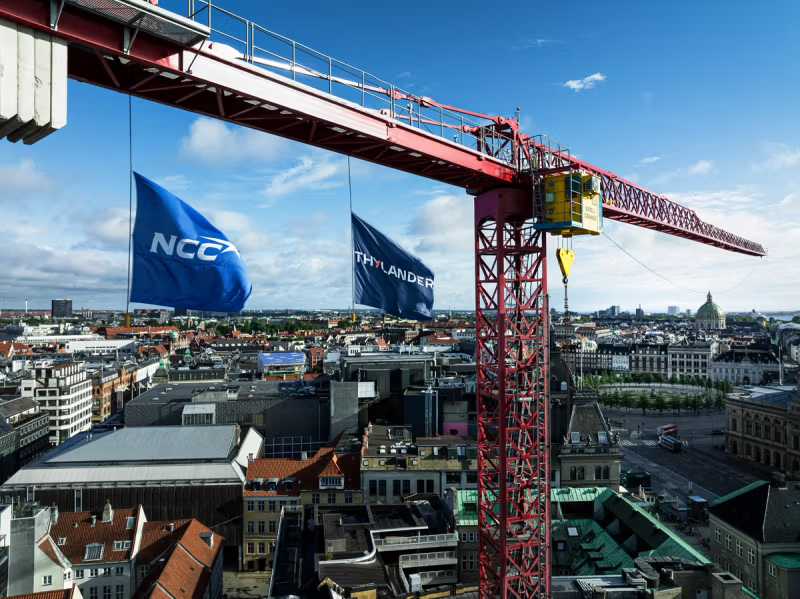
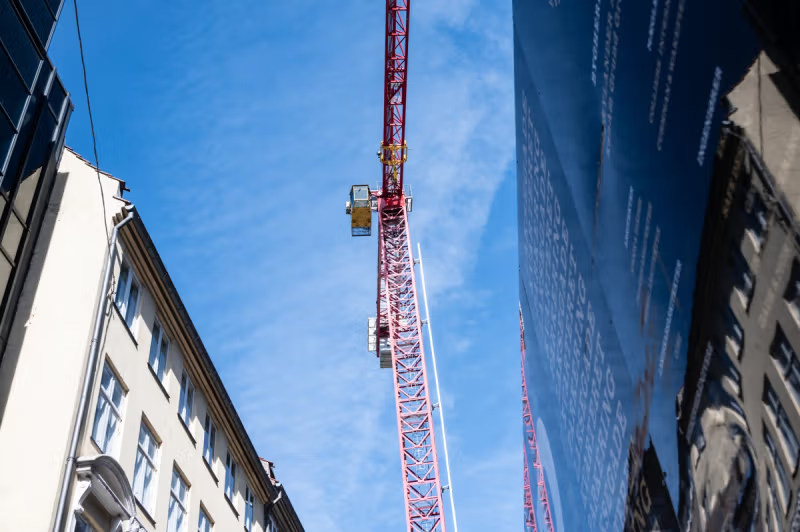
It's hard to miss: the red tower crane now rising above the city's rooftops in the historic "mayonnaise district."
It's main contractor NCC has invited the tower crane for a visit, and will help lift the ambitious transformation project that will occupy the coming years: the Laksegade Kvarteret in the heart of Copenhagen.
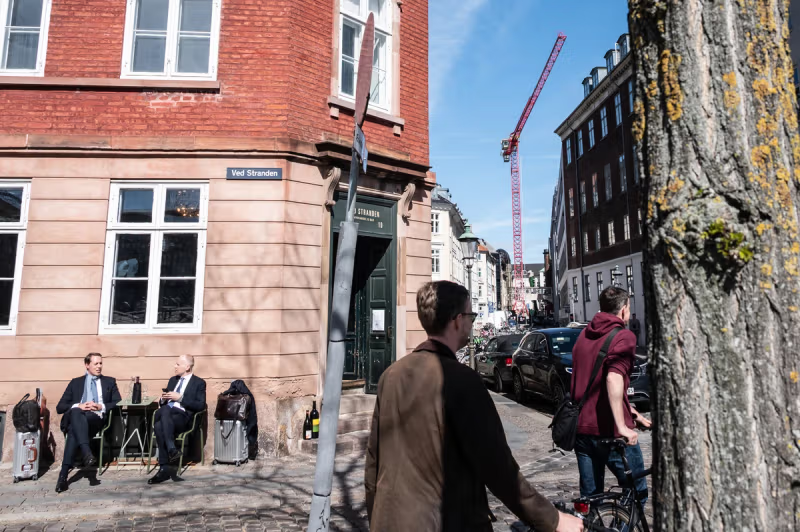
"This is a construction job you don't come across every day. The central location naturally brings some logistical challenges, but they're worth taking on when you get to work in and with such a historic district. It's hard not to be impressed once you get to know these characterful buildings and see how they're all connected by staircases that are worth a visit in themselves. And with the tower crane's arrival, we can begin writing the new chapter in Laksegade's history,"
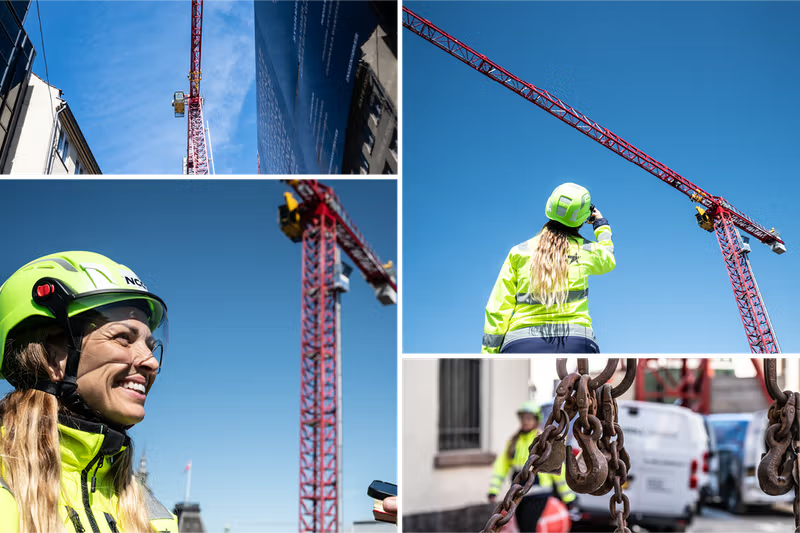
Says Anja Klingsøe, who as project coordinator at NCC works closely with the site manager to keep daily operations running smoothly – now with the crane's help.
From Closed-Off to Welcoming City District
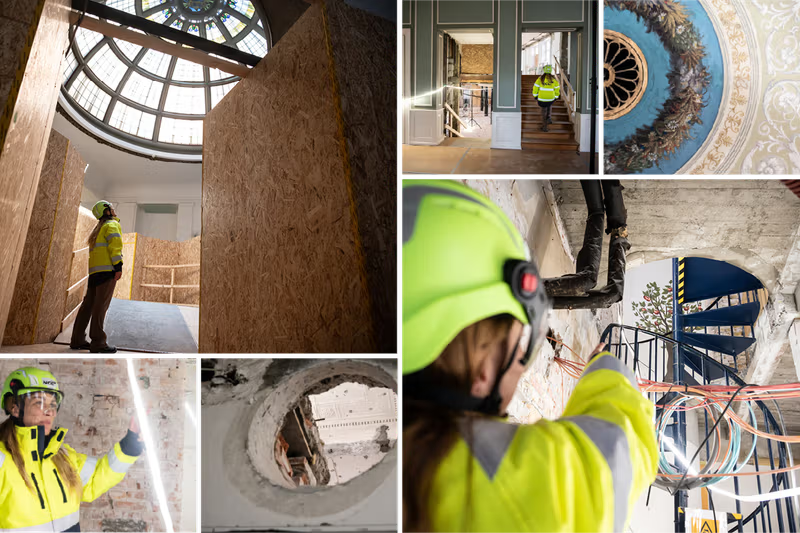
Over the next couple of years, the 16 properties will be rebuilt and transformed into new spaces housing offices, shops, restaurants, a hotel, and a parking facility.
"Now we're taking the first big step toward opening up Laksegade, so that the city's residents can come in and be part of something that has been a closed banking district for more than 150 years. It's Thylander that has set the high level of ambition, and the challenge for us is to preserve as much as possible while bringing the functions into the 21st century,"
Says Anja Klingsøe, adjusting her helmet and glasses.
The first phase comprises five office units and two shops, which are expected to be completed in about two years.
The Backbone of Production
Out on the construction site, there's no doubt that the tower crane is a milestone for progress. It's even referred to as the backbone of production.
"With the tower crane in place, we can plan deliveries, bring materials in and waste out. On the ground we only have one way out, and it's one-way. In the air, however, we can solve and lift tasks without creating space problems. We already have trade contractors queuing up to book the crane. That's why it's absolutely essential," says a happy project coordinator, noting that the tower crane is expected to carry out a good 7,000 lifts during the first phase alone. That requires close coordination with the site manager on a daily basis.
Ask Anja Klingsøe which lifts she's especially looking forward to, and she lights up.
"A lift is always spectacular. Whether it's a mobile crane putting the tower crane's jib in place, or a wheelbarrow going up to the third floor. But what I'm really looking forward to is the container I know needs to be lifted in for our demolition team. That's not a lift you see every day."
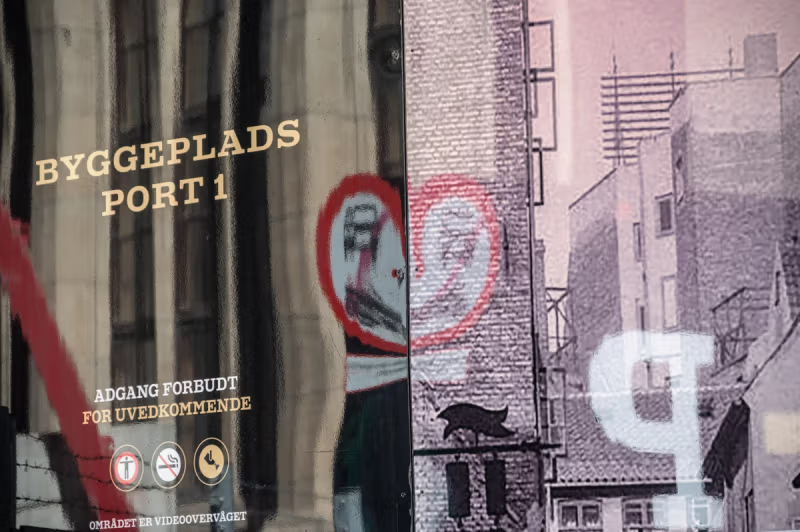
Dear Neighbours…
Besides the logistical puzzle, positioning the tower crane has also required consideration for the surrounding area.
"We have a number of residents and businesses who are affected when we put up a tower crane and the lifts that come with it. It's already required some goodwill from our neighbours, since we had to close off the area so the crane could be put in place. We know you can't have a construction site as a neighbour without noticing it. And we take that seriously.
I hope that neighbours and passers-by, when they see the crane at work, will think about what's coming. Maybe we'll even be lucky enough that they'll follow our work and find it exciting."
And speaking of exciting work…
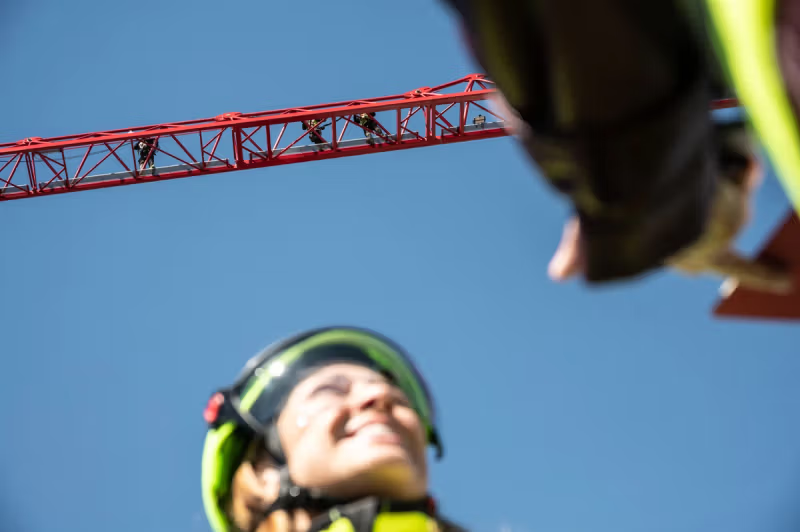
Tower Cranes for Nerds
It wasn't just anyone who was called in when the tower crane in Laksegade needed to go up. Danish company Krøll Cranes brought in a team of experienced crane riggers, and the man leading them, Jeppe Wills, is something of a legend – he has helped erect one of the world's strongest tower cranes, with a lifting capacity of 300 tonnes. That job took four months, whereas the tower crane in Laksegade was erected in just three days.
"Laksegade's red tower crane is a so-called K430. It's 46 metres tall and, by eye, nearly 10 metres taller than the yellow crane next door at the National Bank. When it comes to cranes, height always matters. But that's actually not the only thing worth highlighting about this one in Laksegade. What's unusual about the one we've put up is the length of the jib. It's 75 metres, plus a 24-metre counter-jib. We don't often fit a jib of that size, and I can tell you it's quite a climb to get all the way out there," says Jeppe Wills with a smile.
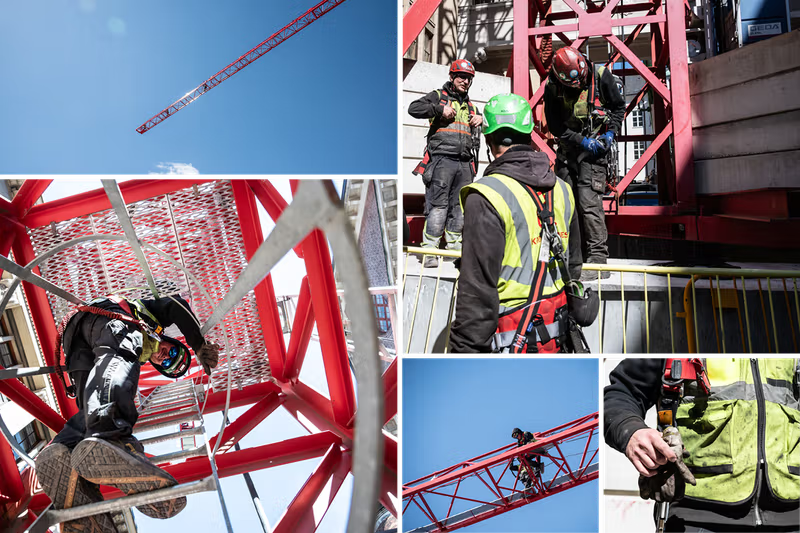
Giant-Scale Lego Bricks
The components for the tower crane arrive as a kit and consist of 42 pieces. Jeppe Wills calls it giant-scale Lego.
"First we built the base cross and added ballast so the crane can't tip over. Then came the mast, the turntable, the operator's cab, and the power supply that makes everything run. From that point on, it becomes a matter of mathematics. We work with what's called a balance principle, where we first mount the counter-jib, which makes the crane tilt backward. With that counterweight, we could mount 20 metres of jib, after which we again had to add concrete counterweights to the counter-jib in order to fit the last jib sections."
The grand finale involved fully loading the counter-jib so the tower crane is ready for the lifts it will carry out.
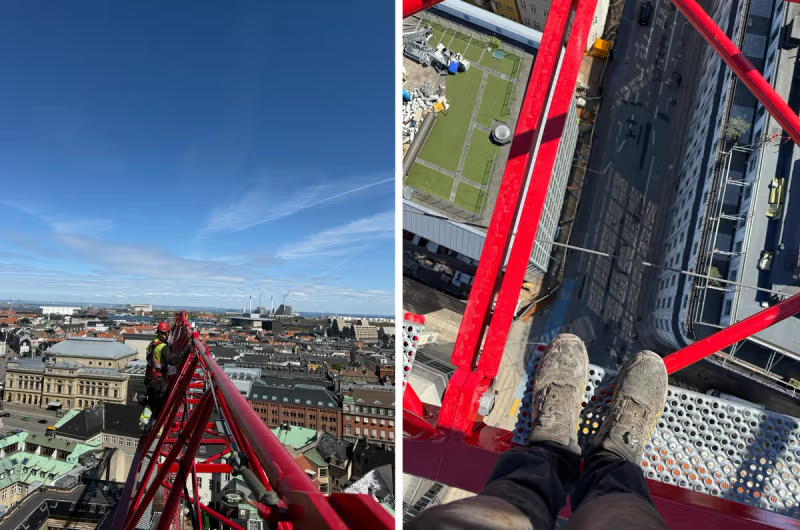
"While all this is going on, we're surrounded by the city's most beautiful view. Of course, it's become something of a daily routine for us in a way, but at Laksegade I still had to stop and take it in. It's rare, after all, to get to see Copenhagen from such a central vantage point. And it actually surprised me how close everything is when you see it from above. It can easily take me 40 minutes to drive around the same area,"
Says Jeppe Wills, sharing two photos he took from the top:
Fall Protection and Height Rescue
It's obviously not without risk to move around at a height of 46 metres. For that reason, the crane riggers must attend a fall-protection and height-rescue course every other year.
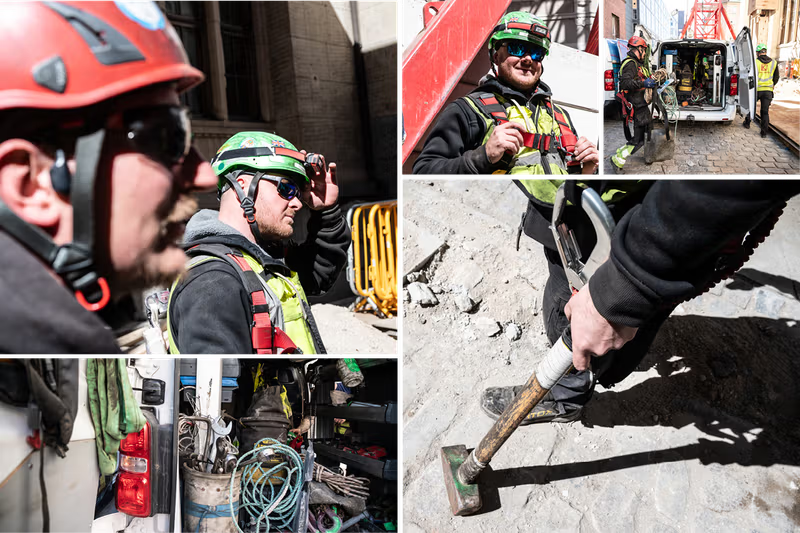
"We always carry rescue equipment and wear a fall-arrest harness, but progress matters just as much. We shouldn't walk around on the crane more than absolutely necessary. That's why our tool belt also includes a pair of parrot-nose pliers, a bit of hammer gear, and a couple of wrenches," explains Jeppe Wills.
Ask him whether the crane moves, and he nods and points up.
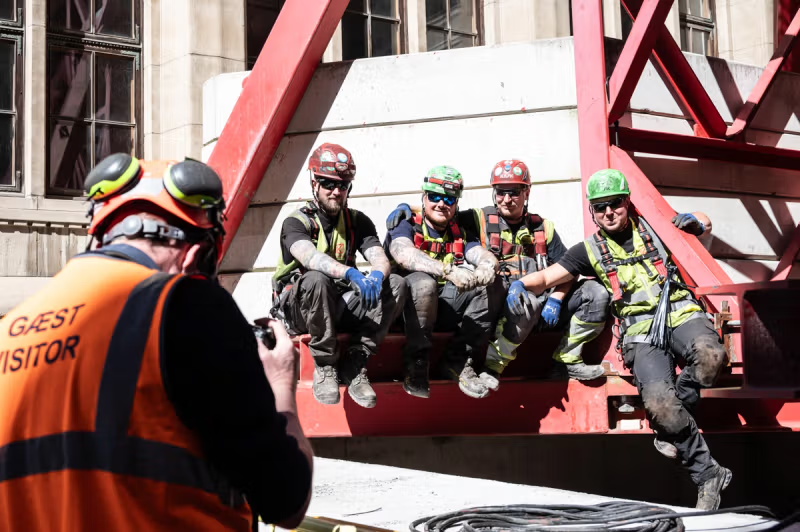
"When we load weight onto the counter-jib, the tip of the jib rises a couple of metres. That's actually quite a lot when you're standing up there. There can also be parts that are stuck or caught in the paint that suddenly break free. Then the whole thing bounces and sways. But most of the time we know when it's going to happen, and then you just tell the guys to hold on tight," says Jeppe Wills, nodding to his colleagues, who are in the process of taking off their safety gear.
It's easy to imagine that the ground might sway a little when the four crane riggers step down after a full day on the crane, but Jeppe Wills quickly dismisses that idea.
"These days we're so seasoned that we no longer notice the difference when we land back on the ground. The crane is our workplace, and crane by crane we've been cured of both fear of heights and land-sickness – but never of missing out on a sunrise," he says with a bit of a grin.
1,000 Record-Sized Salmon
"The most fascinating part of my job is that it always works out. It's a huge feat of precision in more than one sense. From the ground, the mobile crane has to lift crane components up to a height of 46 metres and, at that distance, match them to the connection points where the piece needs to be fitted. We have a guide rope to help angle the component as it meets the riggers on the crane, but it's not easy. We were certainly on edge when we arrived at Laksegade, where on day one alone we ran into two tradesmen who asked whether it was true that the jib was going to be 75 metres. They were quite keen to see that for themselves."
And it worked out, as it always does. The tower crane is now ready for the lifts already queued up. And according to crane lore from Krøll Cranes, it can lift up to 18 tonnes – equivalent to 18 passenger cars, or a good 1,000 of the so-called record-sized salmon, to stay in the spirit of things.
In other words, the tower crane isn't just a tool. It's a sign that something is in motion. That Laksegade is opening up again.

About Laksegade Kvarteret
In the heart of historic Copenhagen lies Laksegade Kvarteret. After nearly 150 years as a financial hub, the 16 properties are now undergoing a comprehensive transformation. A total of 50,200 m² will be developed into a lively and open city district with offices, shops, cafés, restaurants, a hotel, and public facilities, inviting Copenhageners back in. The new district will also feature a new passage between Holmens Kanal and Laksegade, new public spaces, and more trees and greenery in the area.
Developer: Thylander and KanAm Grund Group
Main contractor: NCC
Architects: Praksis Arkitekter
Engineer: EKJ Rådgivende Ingeniører
Landscape architect: Cobe
Photos: Stine Skøtt Olesen / NXT // Jeppe Wills / Krøll Cranes Text: Nikoline Kern / NXT